
Damned Clankers
Thoughts On Artificial Intelligence in Thousand Suns

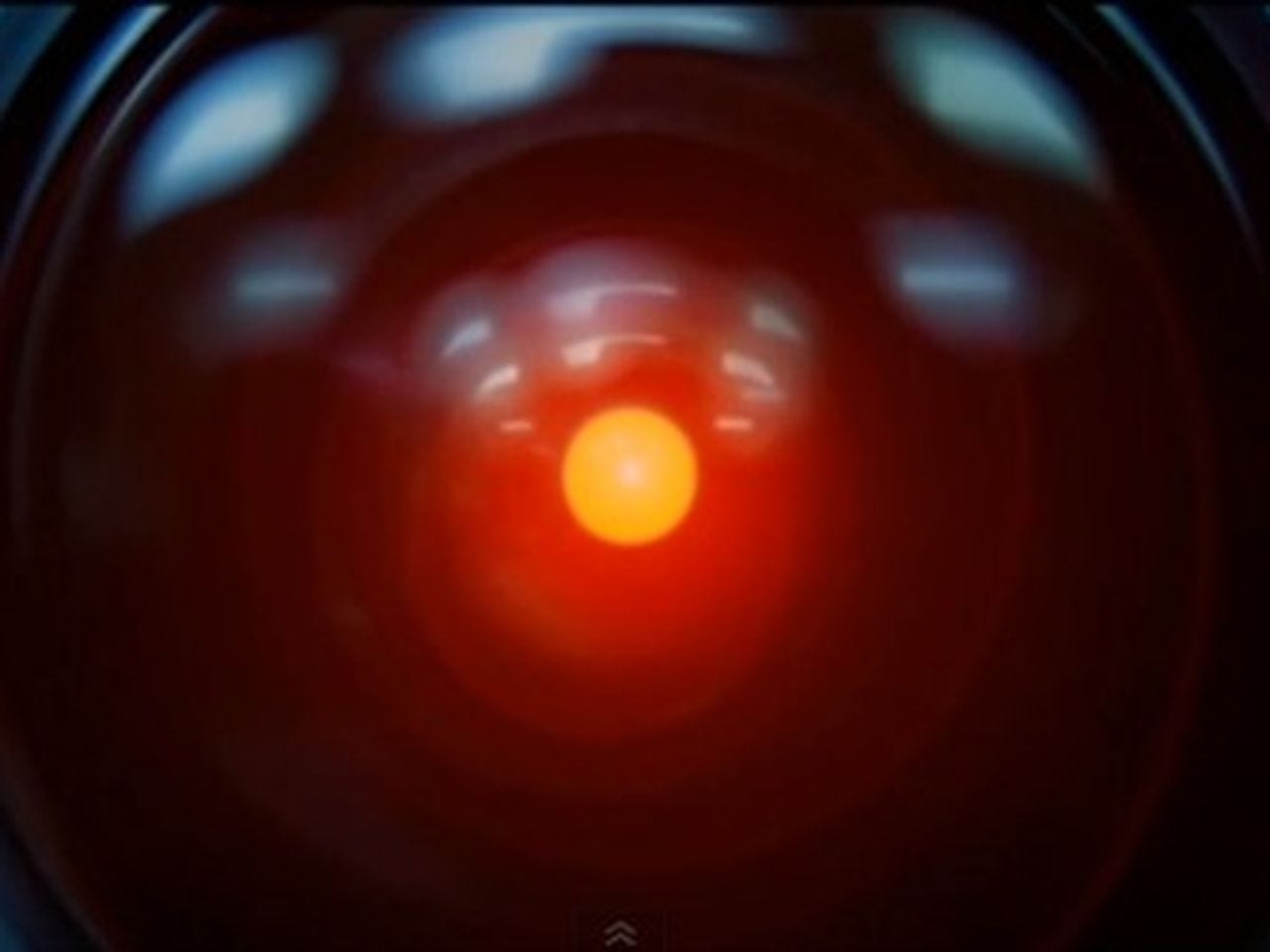
I don’t quite recall when I first became aware of HAL 9000 from the 1968 film, 2001: A Space Odyssey. If I had to guess, I suspect it was sometime in 1977 or ‘78, several years before I’d first see the movie. At that time, I was, like every other boy in America, a huge fan of Star Wars and read everything even the least bit connected to it. This included the Marvel Comics adaptation scripted by Roy Thomas and penciled by Howard Chaykin, which I adored, many of whose panels are seared into my memory even now.
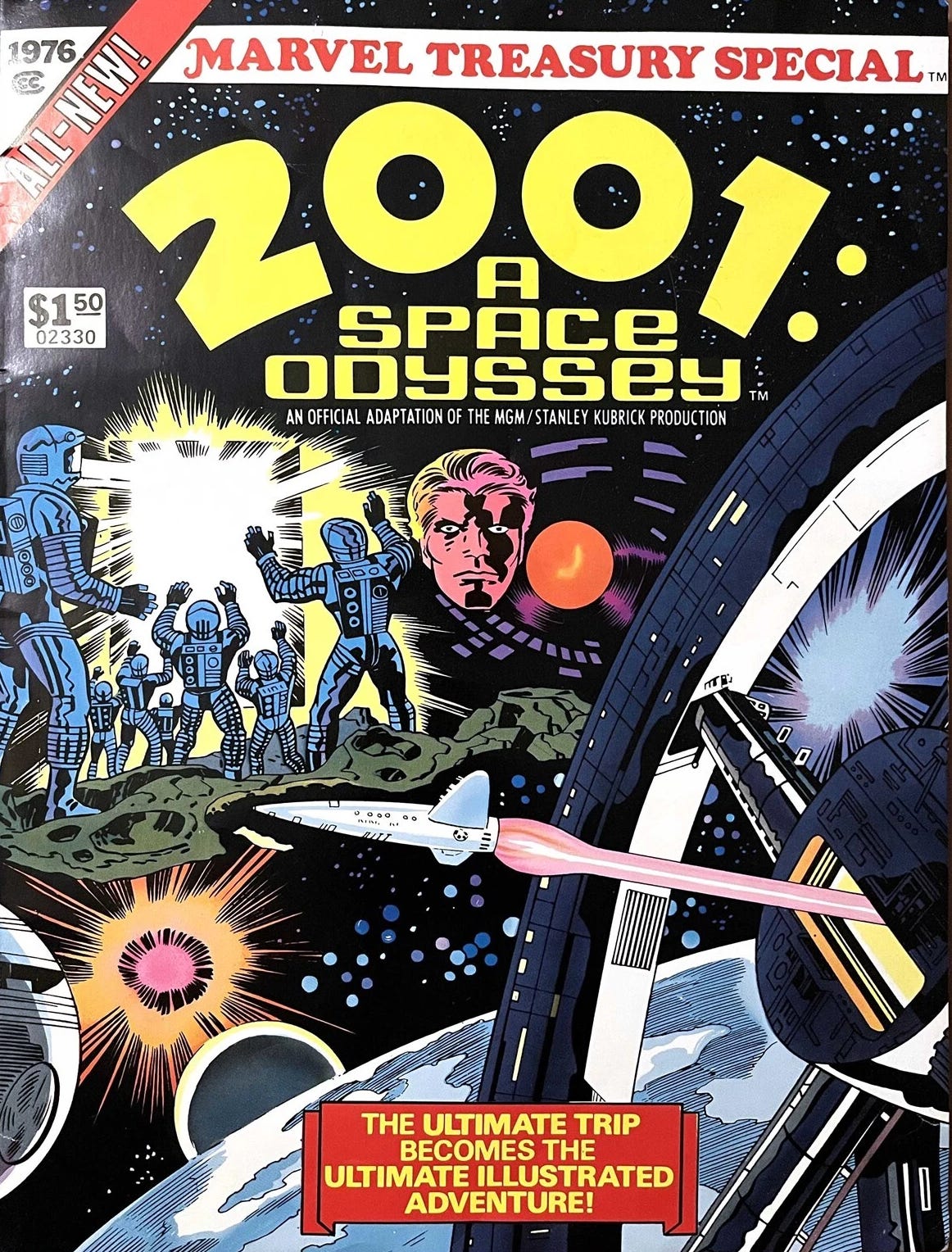
After its initial six-issue run, I continued to read the comic, which then started to produce all-new stories featuring George Lucas’s characters. Though I can’t be absolutely certain, I believe one of those later issues also featured an advertisement for other Marvel adaptations of science fiction movies, like Logan’s Run and 2001, the idea no doubt being that, if you liked Star Wars, you’d love these comics as well. Whether it worked for anyone else I don’t know, but it certainly worked for me. I eventually bought, read, and enjoyed all those comics, with Jack Kirby’s 2001 adaptation leaving a powerful impression on me.
It was in the pages of this comic that I first encountered HAL 9000 and I was quite taken with him. I was, of course, already quite familiar with the idea of intelligent machines through books, movies, TV shows, and comics, but HAL was very different, at least to my young mind. He wasn’t exactly evil, but he didn’t seem to have taken the best interests of David Bowman, Frank Poole, and the other astronauts aboard the Discovery to “heart.” In fact, he outright denied his malevolence, even expressing confusion over his own behavior. If anything, HAL seemed insane and his pleading with Bowman not to disconnect his cognitive circuits borders on the genuinely pathetic.
Later, after I’d seen the movie, my opinion of HAL 9000 remained roughly the same: he was crazy, yes, but not actively hostile. To my youthful mind, he seemed too rational to be genuinely villainous. There was no emotion in his actions and, therefore, I found it difficult to impute to him any kind of malice. That’s more or less the opinion I held about HAL until very recently.
However, on my recent trip back from Rome, I had a lot of time to kill over the course of the eight and a half hour flight. Since I find it nigh impossible to sleep on a plane, I took advantage of the vast library of movies on offer to rewatch 2001: A Space Odyssey for the first time in several years. As expected, the film held up quite well, despite its being even older than I am. Indeed, I was frequently struck by how often it successfully anticipated aspects of the future (and was amused by those times when it clearly missed the mark).
This time, though, I had a much more viscerally negative reaction to HAL 9000. I actively disliked him from the moment he appears and everything he said — and the way he said it — irked. His obfuscations and attempts to hide his actions made me angry. By the time Bowman has decided to pull the plug on him, I was rooting for him to do so. My ears were deaf to his pleas for mercy. In fact, I enjoyed watching him be lobotomized and put in his place.
It was a very strange experience and I’m not wholly sure why, on this occasion, I reacted so strongly and so negatively toward HAL. I could probably chalk it up to many things, including the fact that I was likely quite overtired from my travels when I watched the movie, but I’m not sure that’s the explanation. Regardless, I felt this way and I felt it strongly — so much so that I carried those feelings with me for several days afterwards.

I try not to let such experiences go to waste. Feeling so negative toward HAL 9000 and what he represented seemed like potent creative fuel for thinking about the Von Neumann Wars, their background, and the place of artificially intelligent machines within the Thousand Suns setting. I decided long ago, for purely practical reasons, to severely limit, the existence and use of AI in the setting. Now, though, I had more ideas about how best to make use of AI as a source of adventures and campaign situations, some of which I’ll talk about in a future post. (I also realized I had to come up with an alternative name for artificial intelligence, given its present-day ubiquity to describe something very different from what I’m describing in the game.)
It’s funny the things that can spark inspiration.
I was fortunate enough to have the 2018 50th anniversary of 2001 show (in 70mm!) at a theater less than an hour away from me (even better that it was at neon-enshrouded built in 1938 picture palace).
I'd probably not re-watched the movie for well over a decade, and never on the big screen (let alone a *giant* screen). If you get the chance to see it in a theater I highly recommend watching it again. It hits entirely different IMO.
To hazard a guess, perhaps experience with modern LLMs, even if you don't directly use them, led to your newfound antipathy?