
Thousand Suns Updates
What I've Been Up To

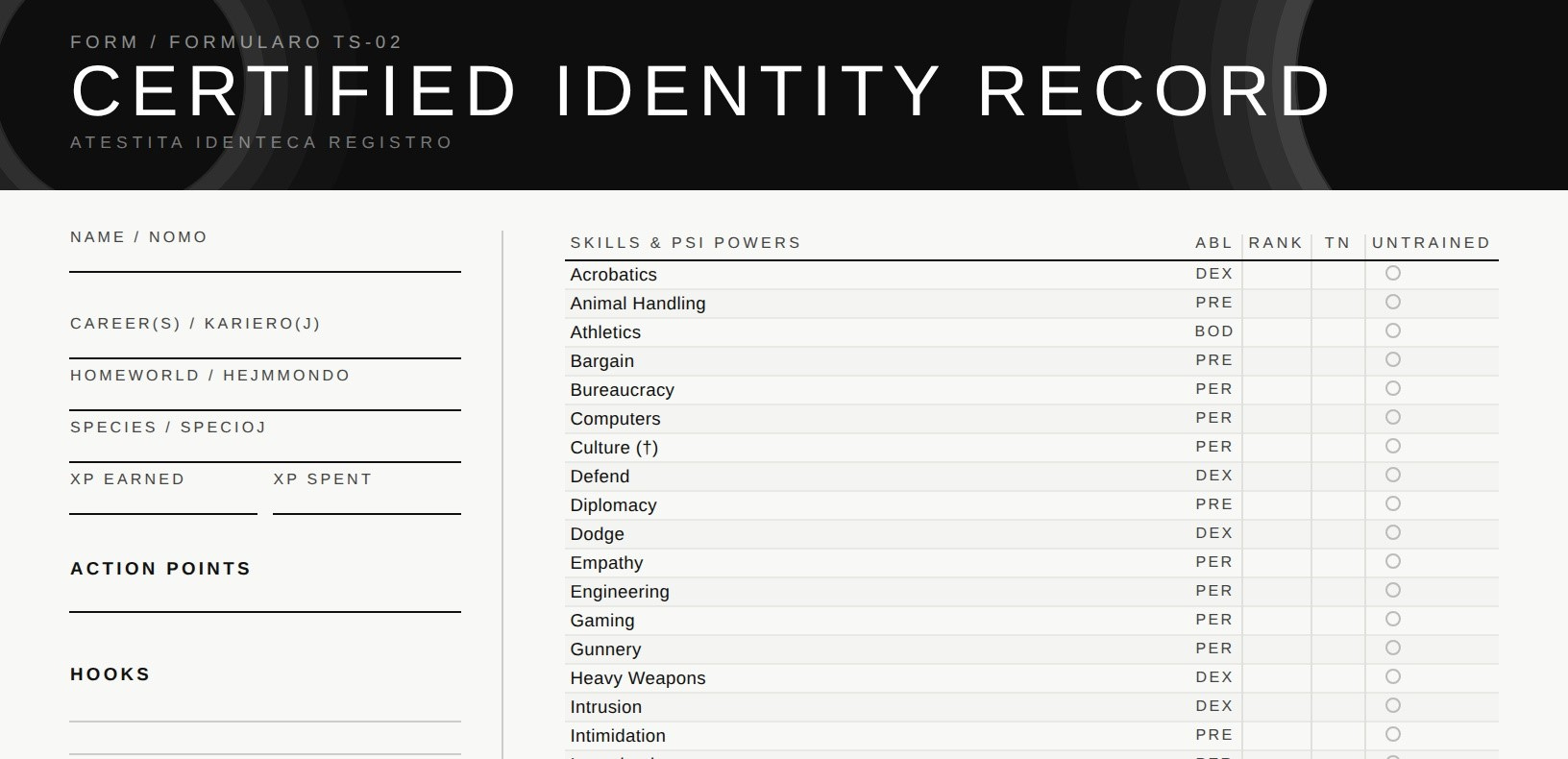
It’s amazing how quickly time has flown by. We’re already more than halfway through May and I’d hoped to be closer to completing the first draft of Thousand Suns second edition than I am. Tia estas la vivo!, as they say in Lingvo Tera. Even so, I have been quite productive and I remain sanguine about the likelihood I’ll make a good deal more progress before I leave for Rome.
One of the reasons I’ve not completed as many chapters as I’d imagined I would is that I’ve been thinking more carefully about the presentation of Thousand Suns — not just its physical presentation but also its specific content. Indeed, these two topics have increasingly become intertwined, as I’ll try to explain.
Both the original 2008 and revised 2011 versions of Thousand Suns were written and presented to be as “generic” as possible. That is, I wanted the game to be as devoid of an explicit setting as possible, in the belief that this would make it not only more accessible but also more attractive. My thinking was that roleplayers preferred a game that left a lot to their imaginations. My models were many of the old school RPGs I cut my teeth on, like Dungeons & Dragons or Traveller, neither of which had their own settings when first released.
Of course, as anyone who knows the history of those early games will know, almost none of them were without settings of their own for very long. Traveller, for example, has long been synonymous with its Third Imperium setting, a connection that’s only gotten stronger as the decades have passed. Indeed, I’d argue that it’s precisely because of these games’ settings that they’ve remained as popular and durable as they have (D&D, being the first RPG, is something an exception). Had Traveller remained simply a generic game of “science-fiction adventure in the far future,” would it still be well known today?
Consequently, as I’ve pondered how best to proceed with the second edition of Thousand Suns, I’ve come to realize that its original approach to setting was, while well intentioned, somewhat misguided. I imagined that potential players of the game wanted — at most — a thin, almost skeletal implied setting so that their own creativity wouldn’t be hampered by my own ideas. In reality, it wasn’t quite so simple. Yes, players like room to make a game their own, but they also want a solid foundation on which to build, something they can use as a launching point for their own creativity and I hadn’t given that to them.
That’s why, as the second edition has evolved in my mind, I’ve been making a more concerted effort to present a clearer — but still open-ended — setting. From the feedback I’ve received, gamers actually want to know more about the universe in which the game takes place. They like evocative little details and tidbits of lore to inspire characters, situations, and adventures. So, a lot of my time lately has been spent thinking about how to include such things without making them onerous or otherwise stifling to individual creativity.
It’s a tough line to walk. One of the reasons I first designed Thousand Suns was my dissatisfaction with the way that Traveller’s Third Imperium setting came to dominate the fandom of the game. Instead of being a science fiction RPG set in the Third Imperium, it increasingly became a game about the Third Imperium. I didn’t want to repeat that error with Thousand Suns. Now, though, I realize that I may have gone too far in the other direction, which is why the second edition will include a more solid setting, though still one that’s very flexible.
I’ll talk more about the specifics of this in a future post, but, for the moment, I’ll simply say that one of the simplest and, I hope, unobtrusive ways that I plan to highlight the game’s setting is through the presentation of the rulebook. I intend that the layout, for example, will subtly convey little details about the setting, as will call-out boxes quoting from fictitious in-universe sources, like the Encyclopedia Galactica. Even things like the character sheet, an early version of which you can see at the top of this post, will be geared toward conveying a sense of place that I feel was missing in the earlier versions of the game.
Obviously, there are trade-offs and I’m still wrestling with some of them, hence the delay in my completion of the first draft. However, I’m greatly encouraged by some of the early reactions of friends and colleagues who’ve seen the direction I’m taking the game. With luck, the end result will be one that achieves what I intend.