
Troubleshooting (Part I)
A New Frame for Thousand Suns

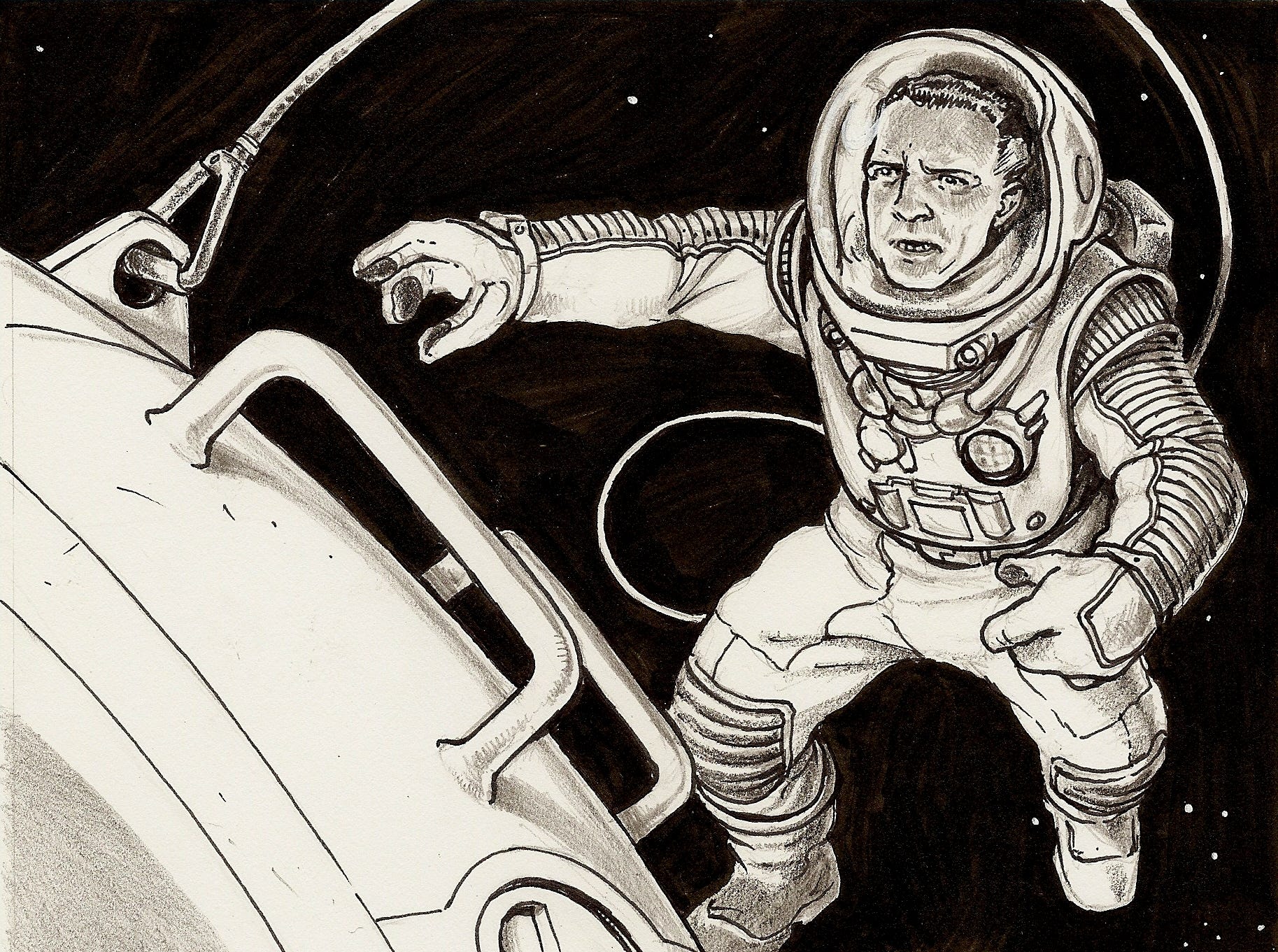
Despite a host of distractions over the past week — still ongoing, I’m afraid — I nevertheless managed to make solid progress in thinking about the second edition of Thousand Suns. One recurring piece of feedback I’ve received is that the original 2011 rulebook doesn’t clearly convey to either players or Game Masters what they’re supposed to do with it.
At first, I found this criticism puzzling. After all, one of the things I’ve always been most pleased with about Thousand Suns is its open-endedness. When someone asks, “What do you do with Thousand Suns?” my instinctive answer has long been, “Whatever you want to do with it!”
But therein, I’ve come to realize, lies the real problem. As admirable as openness and flexibility are — and I still believe they are — they don’t do much to help players or GMs encountering Thousand Suns for the first time, especially if they’re unfamiliar with the “imperial” tradition of science fiction that inspired it. If someone picks up the rulebook, intrigued by its cover, and opens it hoping to learn what a typical Thousand Suns character, adventure, or campaign looks like, what do they actually find?
In truth, not enough. The 2011 edition doesn’t provide sufficient guidance or examples to answer those questions clearly. Having reconsidered the matter in light of this feedback, I’ve reluctantly concluded that this is a real shortcoming — and one that the second edition must address if the game is to reach its full potential.
Before going any further, I want to restate something I’ve been emphasizing in these weekly updates for some time now: the second edition of Thousand Suns will not be a completely different game. Wherever possible, my intention is to keep the rules as close to the 2011 version as I can. The same goes for its tone, its focus, and its core identity. Thousand Suns was always meant to be a vehicle for the kind of science fiction roleplaying I love — stories of vast empires, human ambition, and the growth and decay of civilizations among the stars. That foundation isn’t changing.
What will change is the game’s presentation. My goal is to make the second edition leaner, easier to use, and above all, more immediately helpful to both players and GMs. I want readers to feel ready to play right away. To achieve that, the new edition will often look and read differently from its predecessor, even if, beneath the surface, it remains the same game — or as close to it as I can possibly make it.
I’ve already zeroed in on a couple of big areas where I can achieve this goal, which I intend to discuss here and in upcoming posts. The first concerns a new frame for understanding and playing the game — that is, a clearer sense of what Thousand Suns is about. The original edition assumed that players and GMs already shared a common vocabulary of imperial science fiction, that they instinctively knew what sorts of stories the game was meant to evoke.
In hindsight, that was asking too much. The second edition will make that frame explicit: what kinds of characters inhabit this universe, what kinds of adventures they undertake, and what themes and conflicts drive their experiences among the stars. My hope is that by providing this context, newcomers will be able to grasp Thousand Suns more readily, while longtime players will gain a sharper understanding of what makes it distinctive.
This new frame is not intended to narrow the scope of the game but rather to clarify it. Thousand Suns has always been about freedom — the freedom to chart your own course among the stars and to decide what kinds of adventures you want to play. What the new edition aims to do is make that freedom more approachable and better supported. By defining the game’s core assumptions and presenting a clear sense of what “typical” play looks like, I want to give players and GMs a solid foundation from which to build their own variations. In other words, the second edition won’t tell you what must happen in your universe; it will simply make it easier to imagine what could happen and to start playing right away.
There are two major ways the second edition will do this and each deserves its own discussion. Over the next two weeks, I’ll be exploring them in turn. The first involves the structure of adventures and campaigns — what characters typically do in a game of Thousand Suns and how the rules actively support that kind of play. The second focuses on the meta-setting and how it’s presented, ensuring that both players and GMs can make better, more creative use of it.
In both cases, the goal isn’t to make Thousand Suns an entirely different game, but rather to make it more like itself — the game I always meant it to be: a flexible, human-centered framework for exploring the ambitions, conflicts, and mysteries of a far-future empire.
As much as I like openness and being given freedom to do whatever in games, I think having some sort of guidance or rails or inciting situations or prompts to bounce off of are helpful too. Otherwise, why would I even need a game book in the first place? I was always free to do anything I wanted anyways. Being told I can do whatever I want just tells me I have to do more mental work. While I don't mind that in some situations, in others, I want to be given *something* to start with, a choice of plot threads I can follow up on, a story arc, a backstory, a problem, something to give me an initial direction to go in. Life is already messy and ambiguous enough as it is, I like my stories to be a bit more direct, at least at the on-set.
One thing I liked about Traveller’s 76 Patrons was the world-building it provided.
The series of adventure starters gave an idea of the kinds of things that happened and the different ways they might happen. Broad strokes to fuel a campaign instead of a list of details to memorize.
Maybe that’s a model that could work for Thousand Suns?