
Why Grognardia?
What's in a Name?

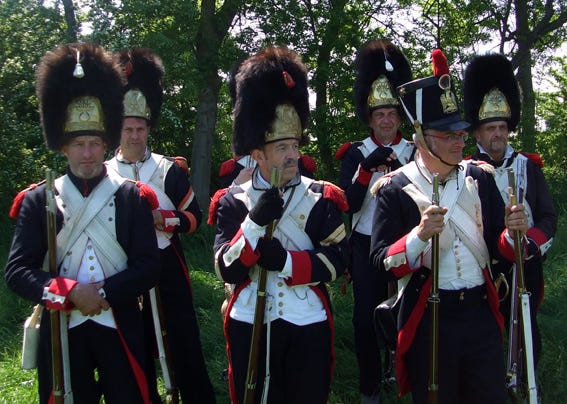
The very first Grognardia post appeared on March 30, 2008 and bore the same title as this one. At the time, I imagined the blog would be a temporary diversion, something I might maintain for a few months or perhaps a year before drifting on to some new interest. I certainly didn’t expect it to last nearly five years during its First Age and then slightly more than that in its Second. In that respect, it was the opposite of how I begin most RPG campaigns. I always assume those will last a long time, even though most do not.
Today, though, I don’t want to talk about the blog’s longevity. Instead, I want to revisit its name. Why Grognardia? Why choose a title derived from a word some people hear as negative, even vaguely insulting?
As I explained in my original post, the name comes from the French grognard, roughly meaning “grumbler” or “grouch.” The first grognards were veteran soldiers of Napoleon’s Old Guard. They’d followed him across Europe, survived countless battles, and, though fiercely loyal, were not shy about telling the emperor exactly what they thought of his latest decisions. Legend has it that Napoleon coined the nickname himself and meant it affectionately.
Fast forward more than a century and a half to the early 1970s. During the board wargaming boom, Strategy & Tactics editor John Young adopted the term for the hobby’s own Old Guard for players who’d been pushing cardboard chits across hex maps long before 1970. Like their Napoleonic predecessors, these wargaming grognards complained often, but they also possessed deep experience and sharp insight. As roleplaying games evolved out of wargaming, the label migrated with them, though often with more caricature and less affection.
I’m not entirely sure when I encountered the word myself. Presumably it was sometime during my childhood or teenage years, as I was discovering the hobby. My recollection is that it was usually used pejoratively, describing the “old guys” who haunted hobby shops and grumbled about “munchkins” and their kiddified versions of Dungeons & Dragons. I ran into these fellows from time to time and our interactions were mostly pleasant. As a newcomer, I found myself oddly fascinated by them. They clearly knew things I didn’t and they were always quick to recommend books I should read. I owe my discovery of H.P. Lovecraft to them, for example.
Those early encounters probably explain why I never saw grognards as inherently bad. Yes, they could be annoying, especially when lost in some digression about a bit of gaming history I didn’t yet appreciate, but they were also reservoirs of knowledge. It was partly in that spirit that I chose Grognardia as the name of my blog. I intended it as a nod to the history of the hobby, its founders, and the ways things were once done.
At the same time, I meant the name to carry a bit of humor. I knew that no matter how open-minded or balanced I tried to be, some people would dismiss any appreciation for the past as evidence of being hidebound or reactionary. Unfortunately, I was right. Over the years, one of the most common criticisms I’ve received is some variant of being a member of the “RPG Taliban.” Ironically, I’ve also been rebuked from the opposite direction, with accusations that I’m insufficiently reverent toward this or that founding figure or that I enjoy games published after 1980 a little too much. A fellow can’t win!
So I thought: why not embrace the whole grognard thing? If being a grognard means caring about where this hobby came from and wanting to preserve what was worthwhile, then, yes, I was guilty as charged.
From the beginning, I openly admitted there would be grumbling. Even so, I hoped then and still hope now, that my complaints, like those of the original grognards, come from a place of loyalty and affection, not bitterness. That, ultimately, is what the name Grognardia has always meant to me. It’s a reminder that you can love something fiercely, complain about it loudly, and still want it to thrive.
If the last seventeen years have taught me anything, it’s that this mix of affection, irritation, curiosity, and reverence is exactly the fuel that keeps a hobby alive. We don’t preserve the past to enshrine it in amber, but to understand it, so that we can build better, richer, and more wonderful things in the present. If that makes me a grognard, then I’ll wear the title proudly.
I started reading Grognardia back in 2008 when I decided i wanted to do art for roleplaying games & discovered Labyrinth Lord!